Stonework That Accounts for Ridge Soil Movement
Stone work in Frostproof for outdoor and indoor installations where clay-heavy soils cause settling and cracking after rainy seasons
Clay-heavy Ridge soils throughout Polk County shift during Florida's wet season, and outdoor stonework installed without proper footing depth settles unevenly within a year. Central Florida Home Remodeling specs drainage and footing requirements before stone is laid, addressing the ground movement that causes patios, walkways, and retaining walls to crack and sink. You need stone work when you're adding a patio, building a garden wall, installing an outdoor kitchen surround, or upgrading an entryway with natural stone.
Stone installation involves site excavation, base compaction, drainage planning, and setting individual stones in mortar or sand depending on the application. The base layer determines long-term stability—insufficient depth or poor drainage allows water to pool beneath the stone, softening the clay soil and causing the surface to settle. Proper footing depth in Central Florida means excavating below the active clay layer and installing a gravel base that drains water away from the stone surface.
Arrange an on-site evaluation to review soil conditions and drainage requirements for your stone project.
What Proper Footing and Drainage Accomplish Long-Term
Site prep begins with excavation to the depth required for stable footing in local soil conditions, followed by compacted gravel and a drainage slope that directs water away from the installation. This step prevents the base from shifting when clay soils expand and contract with seasonal moisture changes. Without it, you'll see cracks in mortared stone and uneven surfaces in dry-laid patios within the first year.
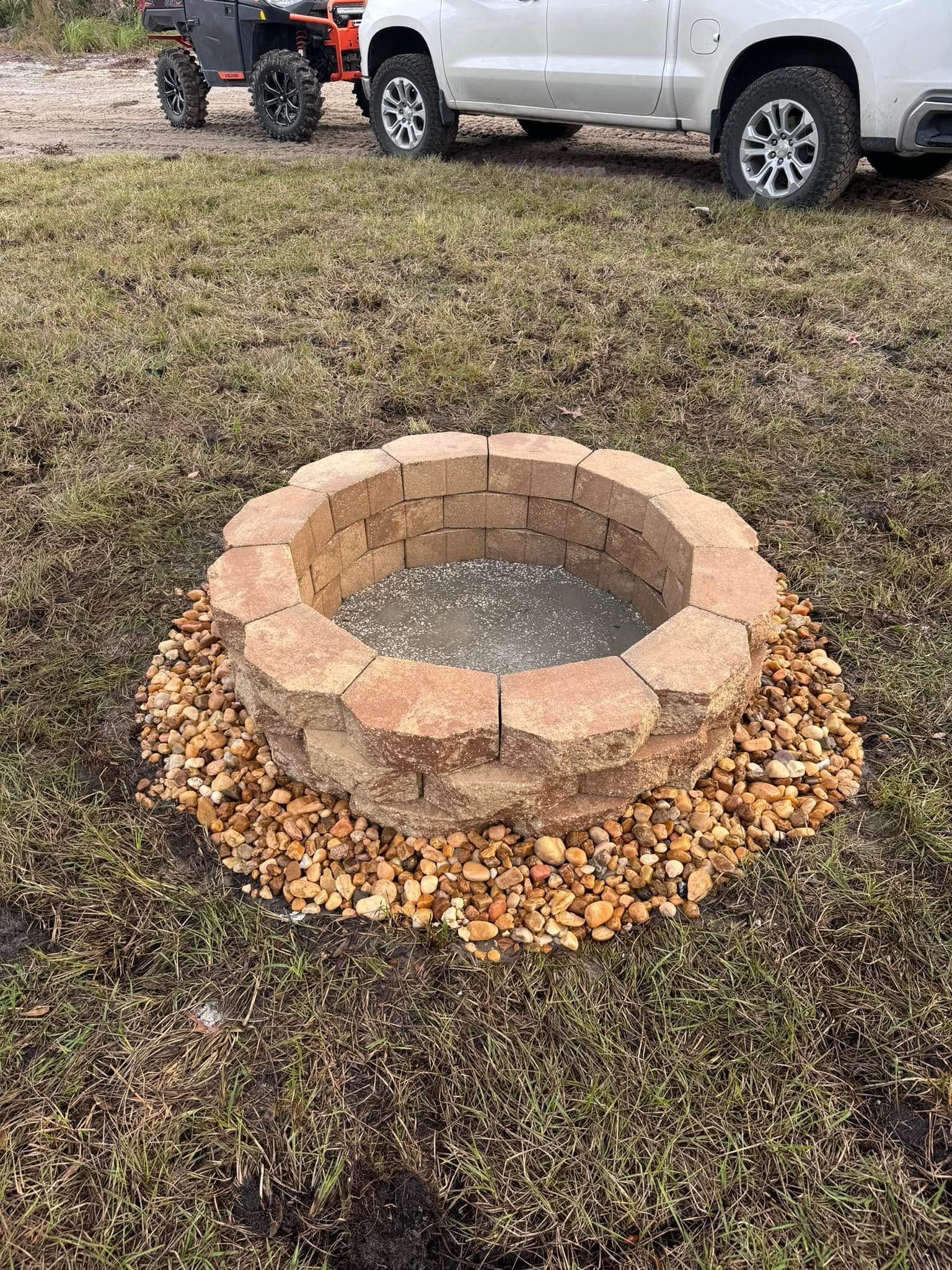
Once the stone is set and the joints are filled, you'll notice a level surface that stays stable through rainy seasons and dry periods. Water drains off the patio instead of pooling in low spots, and individual stones remain locked in position without gaps or movement. Retaining walls hold their alignment, and walkways don't develop the sunken sections common in installations with inadequate base preparation.
This service covers both outdoor installations like patios, walkways, and retaining walls, and indoor applications like stone accents, fireplace surrounds, and entryway floors. The engineering step—calculating footing depth and drainage slope—happens before aesthetic decisions about stone type and pattern. Indoor stone work doesn't face the same settling risks but still requires proper substrate preparation to prevent cracking.
Common Questions About Stone Work
Stone installations in Lake Wales, Babson Park, and surrounding areas require planning that accounts for soil type and seasonal water movement.
What types of stone work do you handle?
We install outdoor patios, walkways, retaining walls, outdoor kitchen surrounds, and garden borders, plus indoor stone accents, fireplace surrounds, and entryway floors. Both natural stone and manufactured stone products are options depending on your budget and design goals.
How deep does the footing need to be for outdoor stone in Central Florida?
Footing depth depends on soil type and stone application, but outdoor patios and walkways typically require excavation of six to eight inches to get below the active clay layer and allow for a compacted gravel base. Retaining walls need deeper footings based on wall height and load.
Why does outdoor stonework crack or settle after installation?
Settling happens when the base isn't compacted properly or when drainage directs water under the stone instead of away from it. Clay soils in Frostproof expand when wet and contract when dry, and this movement cracks stone that's installed on an unstable base.
When is the best time to install outdoor stonework?
Dry seasons allow for better site prep and base compaction, but stone work can be scheduled year-round as long as drainage is planned for rainy conditions. Avoid starting during active heavy rain when excavation and grading become difficult.
What's included in a stone installation estimate?
The estimate covers site evaluation, excavation, base material, stone material, labor, and finishing work like joint filling or sealing. Drainage components like French drains or grading adjustments are included when necessary to prevent water from pooling under the installation.
Central Florida Home Remodeling plans stone installations with attention to the soil and drainage conditions that affect long-term stability throughout the Lakes Area. Contact us to schedule a site visit and discuss footing requirements specific to your property.