Installations That Account for Slab Movement
Tile Work in Frostproof for kitchens and bathrooms where grout cracks after installation despite professional work
Grout cracks in Central Florida homes not because the tile was installed poorly, but because Florida's slab-on-grade construction moves differently than other foundation types. Central Florida Home Remodeling uses mortar selection and back-buttering techniques matched to the specific movement behavior of slab foundations in Frostproof and the Lakes Area. This installation method accounts for how slabs flex with temperature and moisture changes, preventing the grout cracking that homeowners often see within the first year when tile is set with standard thinset and no movement accommodation.
Slab-on-grade foundations expand and contract as ground moisture and temperature fluctuate, creating small but constant movement that rigid grout cannot absorb. The solution involves using flexible mortar formulations and back-buttering each tile to create full contact between the tile and the slab, eliminating voids where movement concentrates stress. Proper joint spacing and grout selection add flexibility to the installation rather than fighting the natural behavior of the slab.
Request a site assessment to evaluate your slab condition and discuss installation methods for your specific project.
How Tile Responds to Florida Slabs Over Time
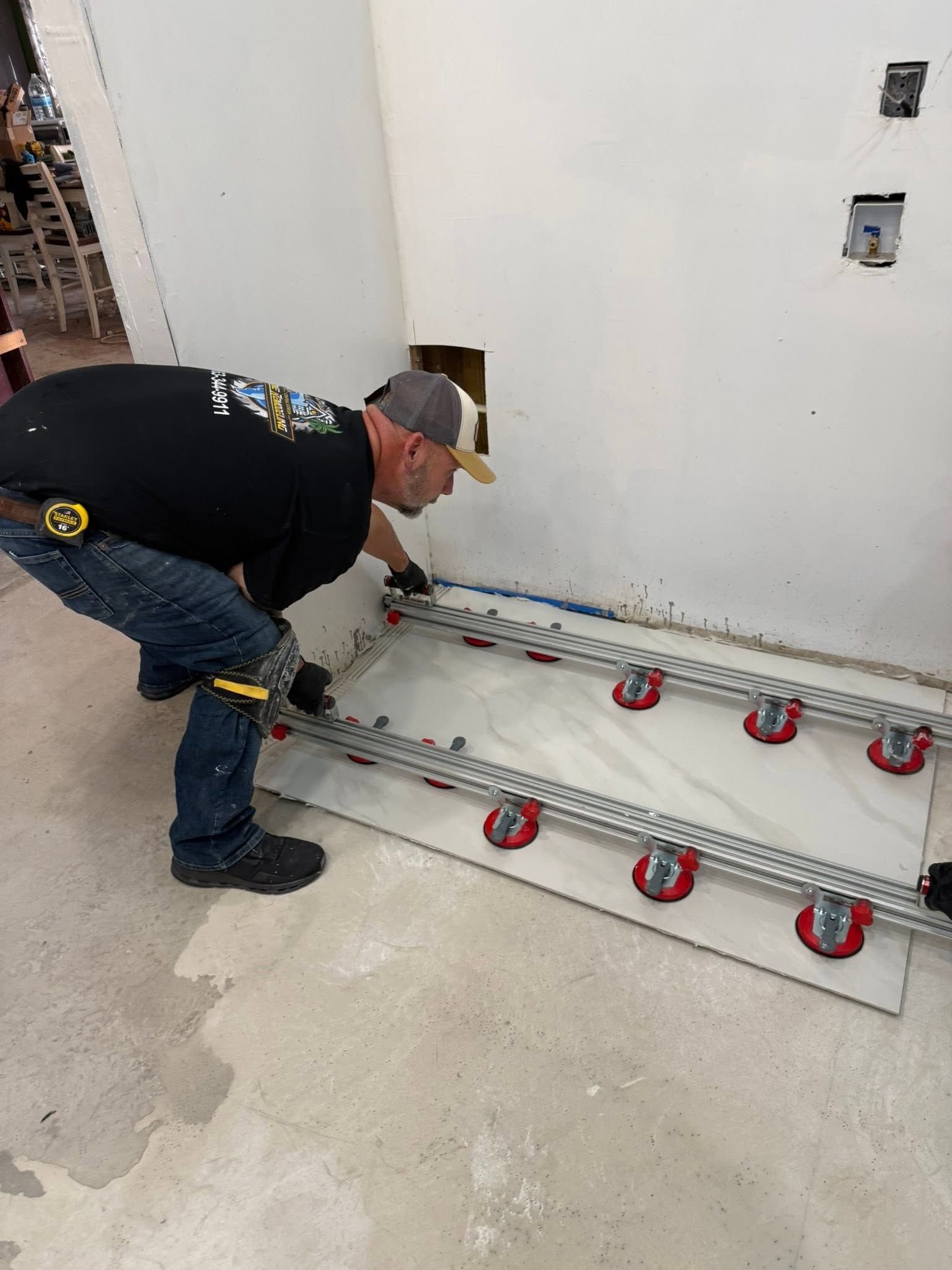
You receive tile set with flexible thinset mortar and back-buttered to ensure full coverage, eliminating the hollow spots that amplify slab movement and cause tiles to crack or grout lines to fail. Each tile is pressed into place with enough mortar to fill the space completely, not just adhered at the corners or center. This creates a stable bond that moves slightly with the slab rather than resisting it.
After installation and curing, your tile floor or wall remains flat and intact even as the slab beneath it shifts with seasonal moisture changes. Grout lines stay solid instead of developing the hairline cracks common in installations where rigid thinset was used or where back-buttering was skipped to save time. The tile surface feels stable underfoot without the hollow sound that indicates poor mortar coverage.
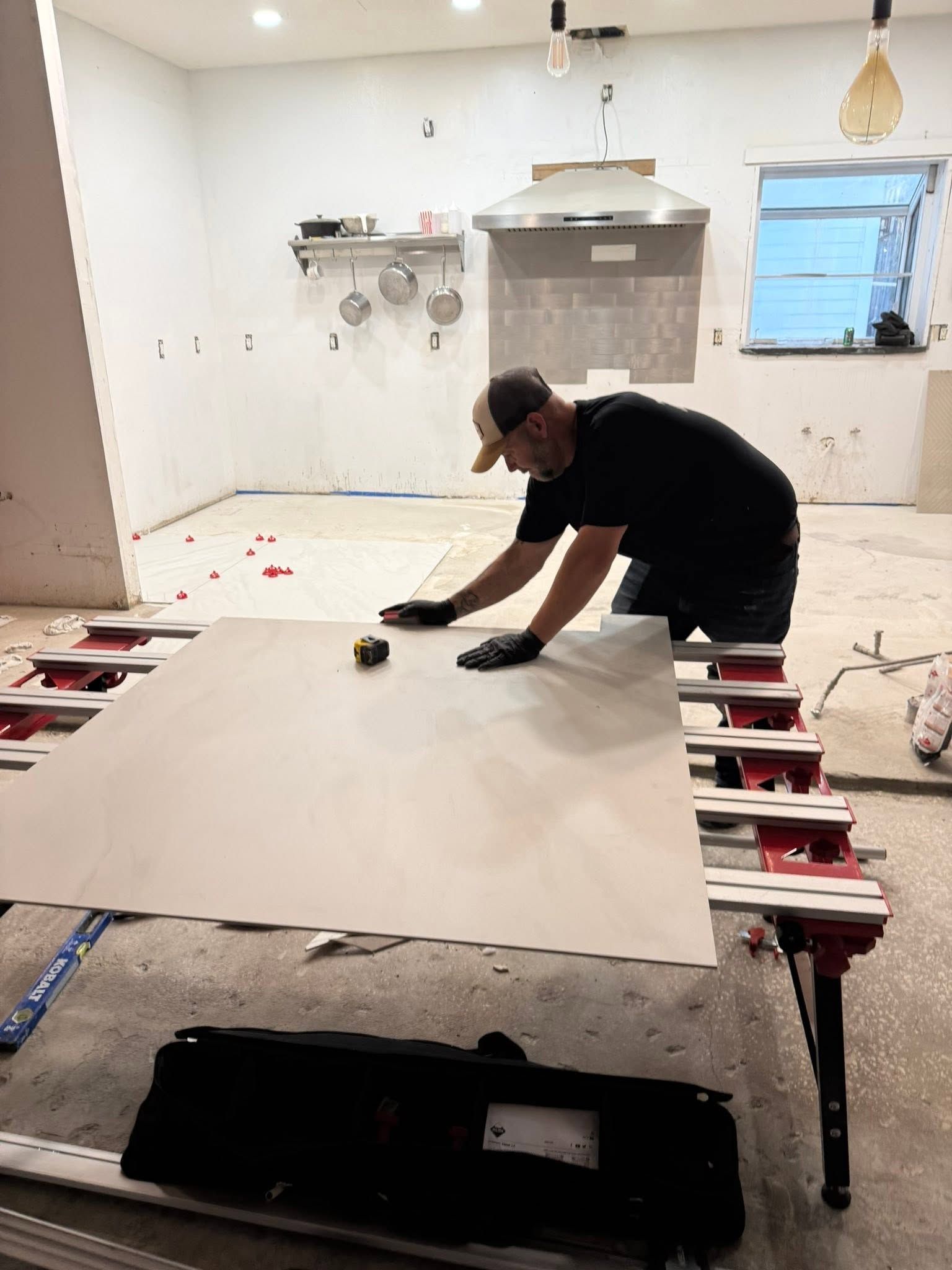
The process includes substrate preparation to ensure the slab surface is level and clean, layout planning to minimize cuts and maintain symmetry, and sealing grout lines after curing to resist moisture penetration. These steps are standard in quality tile work but are especially important in Florida where substrate movement and humidity put additional stress on the installation.
Questions Homeowners Ask About Tile Installation
Homeowners in Dundee, Haines City, and surrounding communities often ask about grout cracking, installation methods, and what makes tile work hold up in Central Florida's conditions.
Why does grout crack even after professional tile installation?
Grout cracks when the slab beneath the tile moves and the installation method doesn't accommodate that movement—using rigid thinset or skipping back-buttering concentrates stress at grout lines.
What is back-buttering and why does it matter?
Back-buttering means applying mortar to the back of each tile in addition to the slab surface, ensuring complete contact and eliminating voids where movement and stress concentrate.
How long does tile installation take for a standard bathroom?
Installation time depends on room size and layout complexity, but proper mortar coverage and curing time cannot be rushed without compromising the bond between tile and slab.
What type of grout works best in Florida kitchens and bathrooms?
Grout with slight flexibility performs better than rigid formulas in slab-on-grade installations, and epoxy grout resists staining and moisture better than traditional cement-based grout in high-traffic areas.
How soon after installation can tile floors be walked on?
Mortar needs at least 24 hours to cure before light foot traffic, and grout requires additional curing time before the floor is ready for normal use and cleaning.
Central Florida Home Remodeling installs tile using methods that account for what Florida slabs do over time. Call (863) 344-9911 to discuss your
tile project and schedule a consultation.